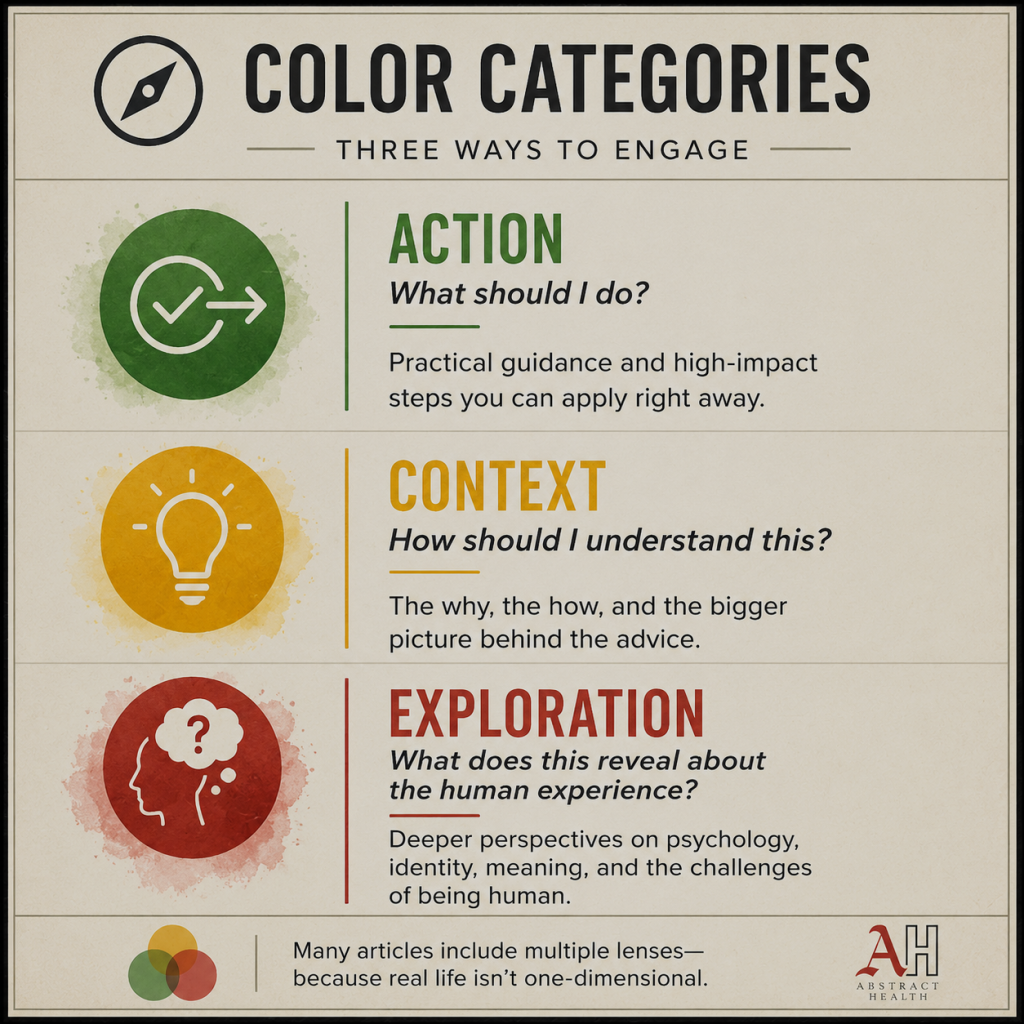
🟢🟡
It probably needs less “boosting” than you’ve been told.
Every fall, immunity becomes a product.
Supplements appear on store shelves. Foods are advertised as “immune boosting.” Powders, gummies, teas, and wellness shots promise to strengthen our defenses just as cold and flu season begins.
The underlying idea sounds reasonable: if a strong immune system protects us from illness, then making it stronger must be better.
But that isn’t really how immunity works.
The immune system isn’t a muscle that becomes stronger simply because we push it harder. It is an extraordinarily complex network of cells, tissues, organs, barriers, and chemical signals tasked with recognizing threats, responding appropriately, and—just as importantly—knowing when to stop responding.
We don’t necessarily want more immune activity.
We want the right immune activity at the right time.
That changes the question.
Instead of asking: How do I boost my immune system?
A better question might be: What does my immune system need in order to do its job well?
Fortunately, the answer is considerably less exciting than the supplement aisle would have us believe.
Think of immunity as an ecosystem
A garden doesn’t thrive because we continuously add more fertilizer.
It needs adequate sunlight. Water. Nutrients. Healthy soil. Biodiversity. Protection from things that can damage it.
And importantly, those things need to exist in reasonable proportions.
Too little water creates problems. So does too much.
The immune system operates with a similar dependence on balance.
Our job isn’t to constantly stimulate it. Our job is to provide the conditions that allow a remarkably sophisticated biological system to function the way it was designed to.
And most of those conditions should already sound familiar.
Eat enough of the things your body needs
Nutrition provides the raw materials the immune system uses to operate.
Protein provides amino acids needed to build and repair tissues, produce antibodies, and support the development and activity of immune cells. Some amino acids also serve as important fuel sources for immune cells, particularly when the body is responding to illness or injury.
Vitamins and minerals—including vitamins A, C, D and E, zinc, selenium, iron, and others—participate in immune-cell development, antioxidant defenses, barrier function, and communication between cells.
The immune system also interacts extensively with the gut and the enormous community of microorganisms living there. A varied diet containing fruits, vegetables, whole grains, legumes, nuts, seeds, and other fiber-rich foods helps support that ecosystem.
Protein deserves particular attention, especially as we age. Maintaining adequate intake helps preserve muscle mass, supports recovery, and ensures the body has the building materials necessary for countless biological processes.
Consider including a meaningful source of protein at most meals. Eggs, yogurt, beans, lentils, tofu, fish, poultry, and meats are all options. Individual protein needs vary, and older adults may benefit from higher intakes to help preserve muscle.
This is one reason the search for the best immune-boosting food misses the larger point.
An orange can be nutritious, but it isn’t an immune-system cheat code.
The benefit comes from repeatedly providing the body with the nutrients it needs—not finding one food with a particularly good marketing department.
And the same principle applies to supplements. Correcting a genuine deficiency can matter tremendously. Taking increasingly large amounts of a nutrient when you’re already getting enough doesn’t necessarily produce increasingly better immunity.
Adequacy matters. More isn’t automatically better. And even beneficial things eventually reach a point of diminishing returns.
Move regularly—and don’t overlook muscle
Physical activity does much more than burn calories.
Movement influences circulation, metabolism, inflammation, stress regulation, and the movement of immune cells throughout the body. Regular moderate activity helps maintain an environment in which immune surveillance and regulation can occur effectively.
But there’s another connection that deserves more attention.
Skeletal muscle plays an important role in supporting immune and metabolic health.
Muscle isn’t simply tissue that moves our bodies. It also serves as a reservoir of amino acids that can become particularly important during illness, injury, or other periods of significant physiological stress.
When demands increase, the body can break down muscle proteins to make amino acids available for essential processes, including immune function and tissue repair.
Muscles also release signaling molecules called myokines, particularly during physical activity. These molecules help communicate with other tissues and participate in regulating metabolism and inflammation.
As we age, we naturally become more susceptible to losing muscle mass and strength. This process, known as sarcopenia, can reduce our physical and metabolic reserves and is associated with poorer health outcomes.
That’s one reason preserving muscle through adequate nutrition and resistance exercise becomes increasingly valuable as we get older.
And it doesn’t necessarily require a gym membership.
Walk.
Lift something.
Ride a bike.
Work in the yard.
Dance in the kitchen.
Add some form of resistance training when you can—even bodyweight exercises, resistance bands, or appropriately challenging everyday tasks can help maintain strength. A good starting point is to include some form of muscle-strengthening activity at least twice a week.
Exercise certainly counts, but movement is bigger than exercise.
The important part is giving a body designed to move regular opportunities to do so.
Give yourself enough time to sleep
We sometimes treat sleep as the part of the day when nothing is happening.
Biologically, quite a lot is happening.
Sleep influences immune signaling, inflammation, antibody responses, and the activity of immune cells. The immune system and sleep are deeply interconnected—which helps explain why inadequate sleep can leave us more vulnerable to infection and why illness often makes us want to sleep.
For most adults, somewhere around 7–9 hours is a reasonable target.
Not because eight hours is magical, but because routinely sacrificing sleep eventually means asking the body to perform important maintenance without enough time to perform it.
And quality matters alongside quantity.
Consistent sleep and wake times, a comfortable sleeping environment, and allowing ourselves enough time to wind down can all help.
Manage what you’re carrying
Stress isn’t inherently bad.
Our stress response exists because sometimes we need it.
But there is a difference between occasionally activating that system and asking it to remain switched on indefinitely.
Persistent psychological stress can alter immune signaling and inflammatory processes, particularly through prolonged activation of stress hormones such as cortisol.
That doesn’t mean we need to eliminate stress.
We couldn’t if we tried.
It means building enough capacity to meet the demands in front of us, recovering when that capacity becomes depleted, and occasionally recognizing that something we’re carrying can simply be put down.
We’ve talked extensively about this recently because stress doesn’t exist in its own isolated health category. It spills into sleep, movement, eating, relationships, and ultimately many of the systems responsible for keeping us well.
And the people around us can influence that capacity, too. Sometimes they help carry the burden. Other times they help us see it more accurately.
Immune health is another place where those connections become visible.
Drink enough
Water isn’t glamorous enough to generate many wellness trends, but nearly every physiological system depends on it.
Adequate hydration supports circulation and the normal functioning of the mucosal surfaces lining places such as our nose, mouth, and respiratory tract—physical barriers that form part of our first line of defense against the outside world.
But how do we know when we’re getting enough?
Fortunately, there are some practical ways to assess our hydration.
Urine color: Pale yellow or straw-colored urine is generally a reassuring sign of hydration. Consistently dark yellow urine may suggest you need more fluids. However, foods, vitamins, and medications can influence urine color, so it isn’t a perfect measurement.
Thirst: For many healthy adults, thirst is a useful biological signal. However, it can become less reliable with age, certain medications, or health conditions.
Daily intake: One simple starting point is to aim for approximately half your body weight (in pounds) in fluid ounces each day. For example, a person weighing 160 pounds might aim for around 80 ounces of fluids.
This is a rough guideline, not a universal recommendation. Individual hydration needs vary based on activity, environment, diet, and health conditions. Fluid from other beverages and water-rich foods also contributes to hydration.
Requirements change with activity, temperature, illness, medications, and certain medical conditions. People with heart or kidney conditions may need individualized guidance or fluid restrictions.
You don’t need to obsess over a perfect number of ounces.
The practical goal is much simpler:
Drink regularly enough to remain adequately hydrated.
Remove a few weeds
Supporting health isn’t only about what we add.
Sometimes it’s about reducing things that interfere with the system.
Smoking and excessive alcohol consumption can impair immune function. A dietary pattern dominated by highly processed, nutrient-poor foods can displace foods that provide fiber and essential nutrients. Chronic stress and insufficient recovery can add additional physiological strain.
You don’t need a perfectly weed-free garden.
You probably just don’t want the weeds taking over.
That distinction matters because health advice often turns moderation into another form of perfectionism.
The occasional dessert isn’t destroying your immune system. Neither is a missed workout or a poor night’s sleep.
What matters most are the patterns we establish over time, not isolated moments.
And then there’s vaccination
Lifestyle habits give the immune system resources.
Vaccines give it information.
That’s an important distinction.
Vaccination exposes the immune system to selected antigens associated with a pathogen so that it can develop antibodies and immune memory without requiring you to first experience the disease itself.
If that pathogen appears later, the immune system has information it can use to mount a faster and more effective response.
Of course, it’s understandable that people have questions or concerns about vaccination. Our health decisions are influenced by personal experiences, trust, access to information, and individual circumstances. Asking questions about safety, effectiveness, and potential risks is reasonable. Those questions deserve thoughtful, evidence-based answers rather than judgment or dismissal.
And the evidence is substantial. While vaccines aren’t without potential side effects or limitations, decades of research and ongoing safety monitoring support their effectiveness in preventing many infectious diseases and reducing serious complications.
In other words, healthy habits and vaccination aren’t competing approaches to immunity.
They solve different problems.
Eating well cannot teach your adaptive immune system what influenza looks like.
A flu vaccine cannot replace sleep, adequate nutrition, or physical activity.
One helps maintain the system.
The other helps prepare that system for a specific threat.
And neither provides a guarantee.
But vaccination can reduce both the likelihood of infection and the risk of serious complications, depending on the disease and vaccine.
We can also reduce unnecessary exposure in general. Washing our hands, improving indoor air quality, and taking reasonable precautions when we’re sick help reduce the opportunity for pathogens to spread.
There’s value in supporting our defenses.
There’s also value in not asking them to fight every possible battle.
The boring answer wins again
If you were hoping for a secret ingredient, this is admittedly disappointing.
There is no smoothie that guarantees you won’t get sick.
No supplement can compensate indefinitely for inadequate sleep, poor nutrition, inactivity, smoking, excessive alcohol, or chronic stress.
And even someone doing everything “right” will occasionally get sick.
Health doesn’t offer immunity from being human.
Health is based on probabilities—not absolutes.
Some of those probabilities are influenced by our choices. Others are shaped by genetics, age, medical conditions, environments, resources, and circumstances beyond our control.
Getting sick isn’t necessarily evidence that we’ve done something wrong.
What these behaviors can do is help maintain the conditions our immune system needs to perform its job effectively.
Move regularly and maintain your muscle.
Stay hydrated.
Manage stress where you can.
Limit the things that consistently work against you.
Use appropriate preventive healthcare—including vaccination—to prepare for threats we can reasonably anticipate.
None of that is particularly revolutionary.
But that’s a recurring theme here.
The foundations of health rarely need to be hacked.
They need to be supported consistently enough to do what they already know how to do.
Leave a Reply