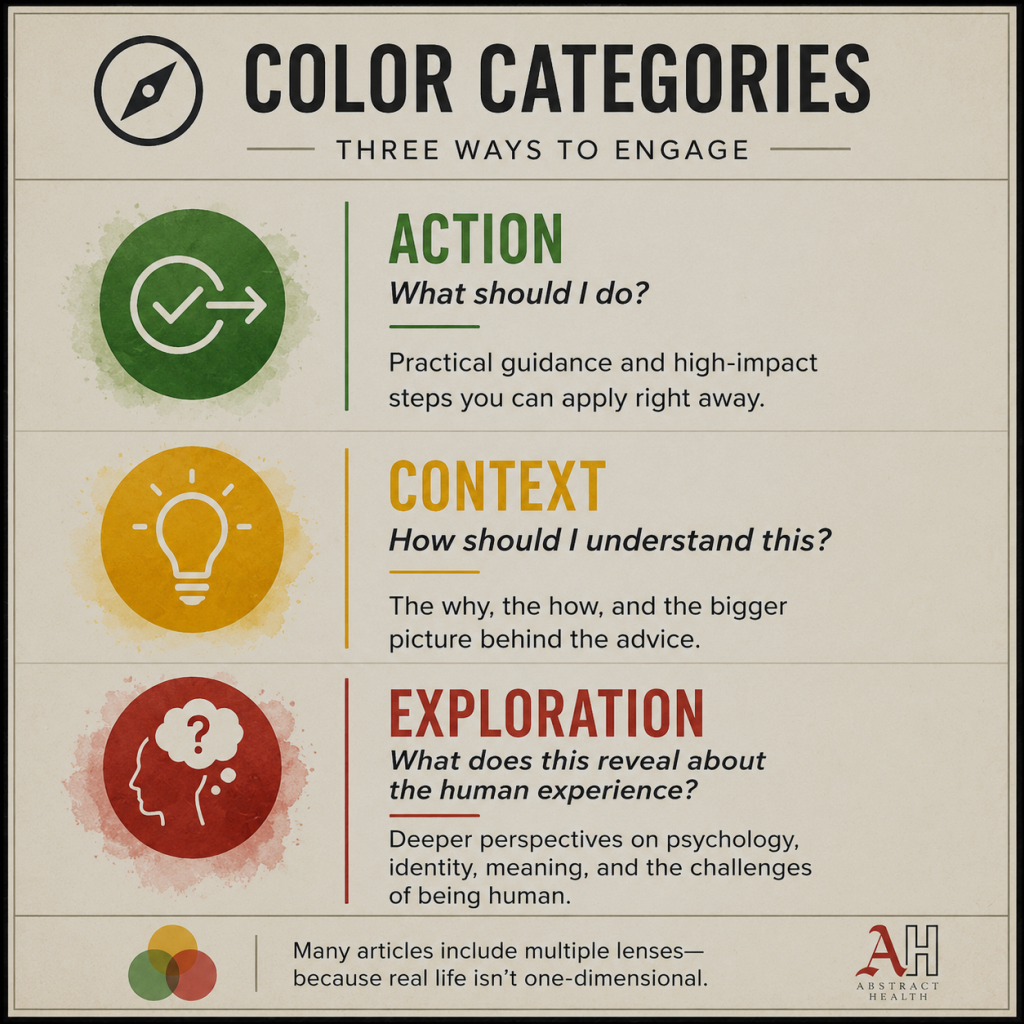
🟡🟢
This article is part of a series exploring what we’ve called The Big Three—sleep, movement, and nutrition. These foundational elements influence nearly every aspect of health, and each one strengthens the others. If you’re new to the concept, I recommend starting with The Big Three before continuing.
We exist in a complex system that requires rest—even when we would prefer not to.
Life is busy.
Hectic.
Chaotic, at times.
And sometimes the only time we get to decompress is when we should be sleeping.
So we make a trade.
We barter time for recovery—
trying to maintain balance as best we can,
trying not to demand too much of the night,
so the day doesn’t demand too much of us.
For a while, it works.
Until it doesn’t.
We all have different relationships with sleep.
Some long for it but have a hard time finding it.
Some fight it.
Some feel most creative and alive at the exact time they should be deep into it.
Some would take a nap every day if life allowed it—drawn to the comfort, the stillness, the peace.
Others see it as an interruption. Something that gets in the way of doing more.
The idea that sleep is important is common knowledge. It goes without saying.
We understand its role in health.
And we feel the consequences when it’s missing—
mentally, physically, emotionally.
But understanding something in theory, and navigating it in real life, are not the same thing.
The clinical need for sleep must pass through the human condition.
And that reality reshapes our relationship with what we should do.
What Sleep Actually Is
Sleep is one of the few states where conscious control fades, and the brain shifts into a different mode of operation.
We don’t just shut off.
The system continues working—
organizing,
repairing,
regulating—
just outside of our awareness.
The Creative Potential of Sleep
There’s a long history of ideas that didn’t come from effort—but from rest.
Dmitri Mendeleev saw the structure of the periodic table in a dream.
Mary Shelley described Frankenstein as she was emerging from a restless night.
Paul McCartney woke up with the melody for “Yesterday” already formed.
These aren’t just interesting stories.
They point to something functional.
During the day, the mind is structured—focused and directed.
At night, that structure loosens just enough to allow new connections.
Creativity isn’t always about pushing harder.
Sometimes it’s about stepping back long enough for the system to do its work.
Sleep as a Foundational Lever
Out of the Big Three—sleep, movement, and nutrition—
sleep is arguably the most foundational.
They all influence one another.
But sleep often becomes the rate-limiting step—
the point at which the system can no longer keep up.
You can think of sleep as an internal organization process.
Like a librarian cleaning up, organizing, and restoring the environment after a full day of activity.
Everything you experienced during the day—
conversations,
stress,
information,
decisions—
all get sorted.
Some things are strengthened. Some are discarded.
Some are connected in ways they weren’t before.
Without that process, things don’t pause.
They accumulate.
Sleep Cycles, Simplified
Sleep isn’t one continuous state.
It moves through cycles—roughly every 90 minutes—
shifting between lighter sleep, deeper sleep, and REM sleep.
Deep sleep supports physical repair.
REM sleep supports learning, memory, and emotional processing.
Deep sleep restores the body.
REM sleep reorganizes the mind.
When sleep is shortened or fragmented,
these cycles get cut short—
and the system doesn’t complete its work.
The Tradeoff We Misunderstand
We often treat sleep as a tradeoff.
More time awake feels like more opportunity.
More productivity.
More control.
But the trade isn’t neutral.
You gain time—but lose clarity, efficiency, and stability.
At a certain point, you’re no longer gaining more time.
You’re simply getting less out of the time you have.
Sleep doesn’t just affect how you feel.
It changes how the system operates.
When sleep is compromised:
Hunger becomes less regulated.
Emotions become more reactive.
Stress responses become amplified.
Recovery slows.
Energy becomes less stable.
Mental precision becomes dulled.
You don’t just feel different.
You function differently.
More effort—less return.
Insight
We often try to fix other inputs.
Better diet.
Better workouts.
More effort.
But sleep sits underneath all of it.
It’s part of the maintenance system—
the one that determines whether anything else actually works.
You can tolerate imperfect nutrition for a while.
You can get by with low movement—for a time.
But when sleep is consistently compromised—
the system begins to shift. And everything built on top of it becomes less reliable.
Before we try to optimize everything else, it makes sense to stabilize the foundation.
Not perfectly. But consistently enough that the system can respond.
Because once sleep is in place—
everything else doesn’t just improve.
It becomes easier to improve.
🟢 What to Do (High-Leverage Actions)
Do it well. Do enough. Do it often.
Start Here (Highest Return for the Effort)
Wake up around the same time every day (±30–60 minutes). The closer to a consistent time, the better—but anything helps. Waking up at a consistent time builds sleep pressure that can help make bedtime easier.
Get light exposure as soon as possible after waking. This helps anchor your circadian rhythm, making it easier to fall asleep that night.
Limit caffeine after early afternoon (~1–2 PM).
Dim lights and reduce screen exposure 1–2 hours before bed.
QUALITY — Sleep Better While You’re There
Keep your room cool, dark, and quiet.
Remove or cover unnecessary light sources (TVs, LEDs, clocks).
Use blackout curtains, a sleep mask, or white noise if needed.
Reserve your bed for sleep and sex.
Avoid alcohol and heavy meals within 2–3 hours of bedtime.
Build a simple, repeatable wind-down routine.
QUANTITY — Give Your Body Enough Time
Aim for 7–9 hours of sleep.
Set a consistent wake time first, then work backward to determine your bedtime.
Don’t rely on weekend catch-up sleep.
Protect sleep like any other important appointment.
CONSISTENCY — Stabilize the System
Keep sleep and wake times within about an hour or less—even on weekends.
Get daily sunlight exposure.
Avoid large late-night meals—not because eating late is inherently “bad,” but because digestion and reflux can interfere with sleep.
Keep exercise timing relatively consistent. Training too close to bedtime may delay sleep onset.
Minimize These
Late caffeine
Late-night screens and bright light
Irregular sleep schedules
Alcohol as a sleep aid
Long or late naps
If You Can’t Sleep
Don’t stay in bed frustrated.
Get up, keep the lights low, and do something relaxing.
Return to bed when you feel sleepy.
Train the association:
Bed = sleep, not stress.
Tips for Sleep Onset
Read a book.
Listen to relaxing music.
Drink warm tea (caffeine-free) or warm milk.
Take a warm shower or bath (keeping lights dim).
Practice deep breathing.
Journal.
Write tomorrow’s to-do list so it isn’t competing for your attention.
Bottom Line
Sleep doesn’t need to be perfect.
It needs to be repeatable and sufficient.
Get this right, and everything else—
nutrition,
movement,
stress—
becomes easier to improve.