Individuals, Organizations, and the Map of What We Know
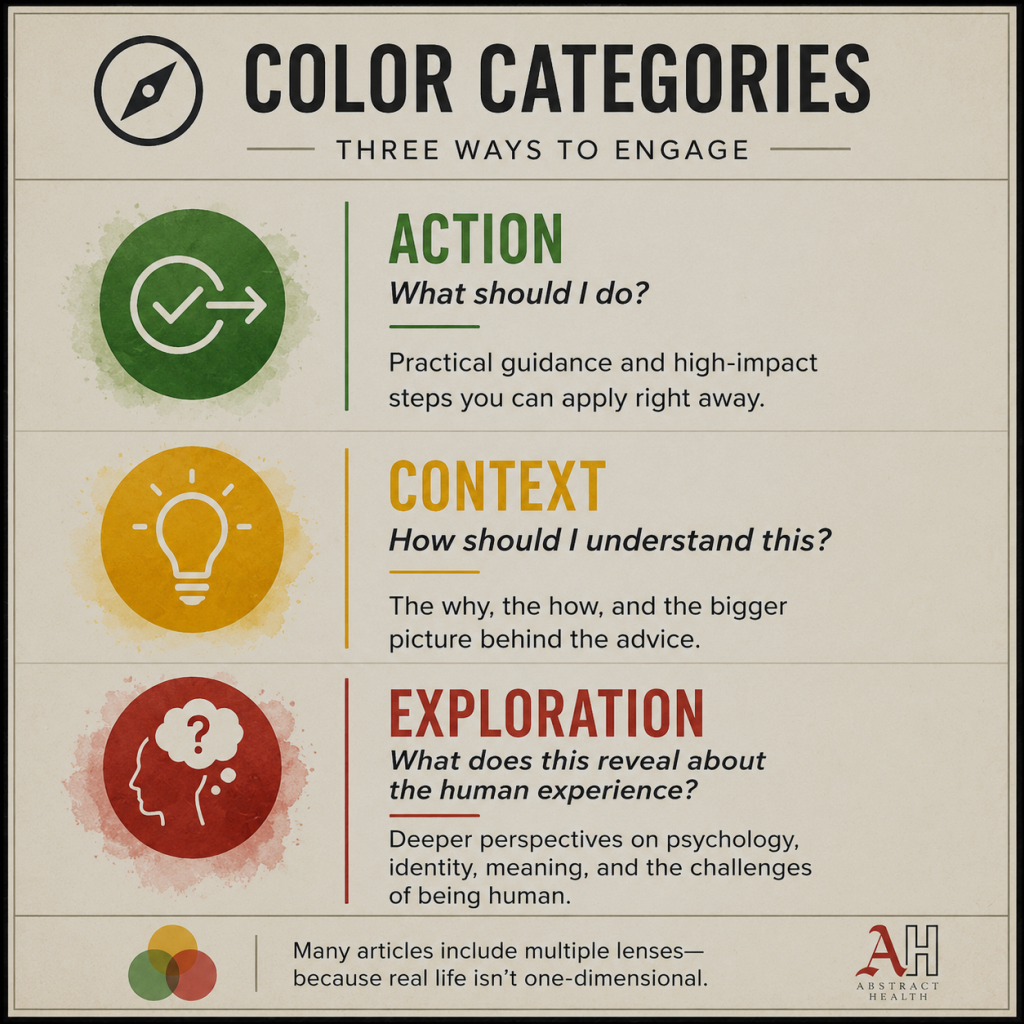
🟡
As we discussed in Your Favorite Expert is Wrong, no single person can see the entire landscape.
That is true in almost every sufficiently complicated field, but it is especially obvious in health.
Nutrition alone spans metabolism, physiology, psychology, epidemiology, food science, behavior change, public health, medicine, statistics, economics, and more. We can spend an entire career studying a relatively narrow portion of that terrain and still reach the end knowing how much remains outside our view.
This is one reason expertise matters.
But it is also why expertise has limits.
An individual expert is a little like someone standing along the shoreline of an enormous island. From where they stand, they may be able to describe their section of the coast in extraordinary detail. They can identify rocks, coves, currents, elevations, and landmarks that someone standing miles away cannot see.
Move around the island, however, and the landscape changes.
Another expert may be looking at the same island from a completely different angle.
Their map may look different without necessarily being wrong.
This creates one of the central problems of expertise:
How do we build a useful map when no single person can see the whole island?
Building the larger map
One solution is to combine observations.
Professional organizations, scientific societies, governmental agencies, consensus panels, and other institutions attempt to do exactly this. Their structures and responsibilities differ, but they share an important function: reducing our dependence on the judgment of any single individual.
Researchers and professionals become the explorers and observers. Organizations help act as the cartographers. And the resulting guidance becomes the shared map.
Instead of relying on a single person’s interpretation of the evidence, we gather the observations of many people. We compare them. We look for areas of agreement. We examine where findings repeatedly overlap.
Over time, the shared portions of those maps begin to tell us something important.
If hundreds of researchers using different methods, populations, laboratories, and perspectives continually describe the same mountain, we become increasingly confident that the mountain is actually there.
This is one of the great strengths of organizations.
They reduce our dependence on any individual expert.
An individual can be unusually insightful. An individual can also be unusually wrong.
Organizations reduce some of that variability by forcing information through multiple layers of scrutiny before it becomes official guidance.
In that sense, organizations are not necessarily the authors of the map.
They are more like its cartographers.
They gather observations from across the landscape and attempt to create a representation that is useful enough for everyone else to navigate.
And when this process works well, the resulting map is extraordinarily valuable.
Why organizational guidance tends to be conservative
This also explains something about institutional recommendations that can otherwise be frustrating.
They tend to be conservative.
An interesting new study does not immediately redraw the coastline.
Neither should it.
Something generally has to meet a threshold before it becomes part of broad guidance. Findings need to be replicated. Methods need to withstand criticism. Alternative explanations need to be considered. The potential benefits of changing recommendations need to outweigh the possibility that the original observation was misleading.
This acts as a kind of filter.
Ideas that fail basic standards of rigor are prevented from entering the map.
But intriguing ideas near the frontier may also be withheld until we understand them better.
That means organizations tend to perform best in the overlapping areas of the map—the portions of the island we have examined repeatedly enough to describe with reasonable confidence.
They are usually less useful at describing the unsettled edges.
This is often a point of frustration for many professionals in a field, especially the ones who pay attention to emerging trends in science and research.
But the hesitation and rigor aren’t necessarily failures. They are partly what these organizations are designed to provide.
We want public-health guidance to be more resistant to speculation.
We want clinical recommendations to require more evidence than interesting hypotheses, even if those hypotheses might eventually become guidance.
The obvious cost of that stability is speed.
The same filter creates blind spots
The mechanisms that protect organizations from prematurely embracing weak ideas can also make them slow to embrace good ones.
Maps take time to update.
Evidence may accumulate for years while official recommendations remain largely unchanged.
Institutions develop procedures, committees, standards, reputations, and bureaucracies. Updating a guideline is not equivalent to one individual simply changing their mind.
And institutions are composed of human beings.
That means they inherit some distinctly human problems.
Status can matter. Hierarchies can develop. Professional identity can become entangled with particular ways of thinking.
Consensus can occasionally become something we perform rather than something we continue to update.
At its worst, professionalism can subtly transform from maintaining intellectual standards into performing professional conformity.
Those are not the same thing.
A field benefits enormously from standards. It benefits much less when those standards become a substitute for thinking.
Organizations also operate within political and economic realities. They need funding. They interact with governments, industries, advocacy groups, and other institutions.
They may have to balance scientific precision against what is practical at a population level.
Years ago, I came across an idea that has stuck with me ever since: science is often simplified for the sake of a clear public-health message. That simplification can be necessary, but it also means some nuance, uncertainty, and individual variability are inevitably lost in translation.
That does not mean we should assume corruption whenever we dislike a recommendation.
It simply means organizations have incentives and vulnerabilities just as individuals do.
The biases are different.
Why we still need the individuals
Fortunately, the official map is not the entire landscape.
Individual professionals continue standing along the shoreline.
Some spend decades studying one particular section and discover details that would be impossible to include in a broad population-level map.
Some explore new territory. They ask questions that have not been answered yet. They notice inconsistencies. They challenge established assumptions.
Occasionally, they discover that a section of the map needs to be redrawn.
This is another reason individual expertise matters.
Organizations are very good at consolidating what has already been observed.
Individuals are often better positioned to explore what has not.
We need both.
But exploration introduces its own problems.
Not everyone standing beyond the edge of the established map is discovering new territory.
Sometimes we mistake uncertainty for opportunity.
Sometimes we become so excited by a new observation that we exaggerate its importance.
Sometimes we convince ourselves that because the official map lacks detail, whatever we have drawn must be superior.
And sometimes people go looking for treasure.
The frontier attracts genuine explorers, but it also attracts people who recognize that there is money, status, attention, or influence available to whoever claims to have discovered something first.
Those motivations can coexist.
A professional can genuinely care about their field while also enjoying the attention their ideas receive.
None of us are completely immune to incentives.
Which means individual freedom comes with an additional burden.
The burden of independent thought
When we move away from organizational guidance, we also move away from some of its safeguards.
There is no committee sitting beside us. There may be no formal review process.
Our judgment becomes more consequential.
That makes intellectual discipline increasingly important.
We have to ask whether we are following the evidence or simply finding evidence that supports what we already believe.
We have to recognize when expertise has begun turning into identity.
We have to separate the excitement of novelty from the strength of evidence behind it.
We have to remain aware that attention, ego, financial incentives, professional recognition, and belonging can quietly influence what we choose to emphasize.
Independent thinking is not simply freedom from authority.
It is accepting greater responsibility for the quality of our own reasoning.
The farther we venture beyond the established map, the greater that burden becomes.
That distinction matters.
“Do your own research” sounds empowering until we recognize how difficult good research actually is.
The goal should not be to replace institutional dogma with individual dogma.
It should be to use each level of expertise for what it does well.
We need the map and the explorers
There is a tendency in modern health conversations to ask which side deserves our trust.
The institution or the individual.
The guideline or the expert.
Consensus or the contrarian.
But that may be the wrong question.
The larger scientific system works because these forces can correct one another.
Individual professionals explore.
Researchers test.
Other researchers challenge.
Organizations consolidate.
Guidelines stabilize.
Then new observations eventually challenge the map again.
The process is imperfect because every part of it is populated by imperfect people.
But imperfection is not the same as uselessness.
Governmental and professional organizations help construct the shared map—the portions of the terrain that have been examined often enough that we can navigate them with reasonable confidence.
Individual professionals give us resolution.
They show us details along particular sections of the map. Some explore new frontiers. Some challenge parts of the existing map. Some discover genuine treasure.
And inevitably, some discover that selling maps can be more profitable than making them accurate.
Understanding those differences becomes increasingly important as information moves beyond science and into the public conversation.
Because once ideas leave the cartographers and explorers, they enter another environment entirely.
There, information does not compete solely on the strength of its evidence.
It begins competing for our attention.